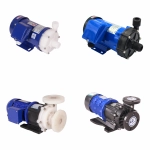
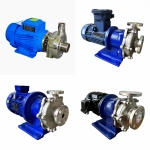
Overview of Magnetic Drive Pumps
Magnetic drive pumps, commonly referred to as mag-drive pumps, are advanced sealless industrial pumping devices that revolutionize traditional fluid transmission technology. Unlike conventional pumps that rely on rigid shaft connections and mechanical shaft seals for power transmission, mag-drive pumps adopt a non-contact magnetic coupling structure to transfer torque from the motor to the impeller. This innovative design completely eliminates dynamic seal leakage points, achieving full hermetic sealing of the pump body.
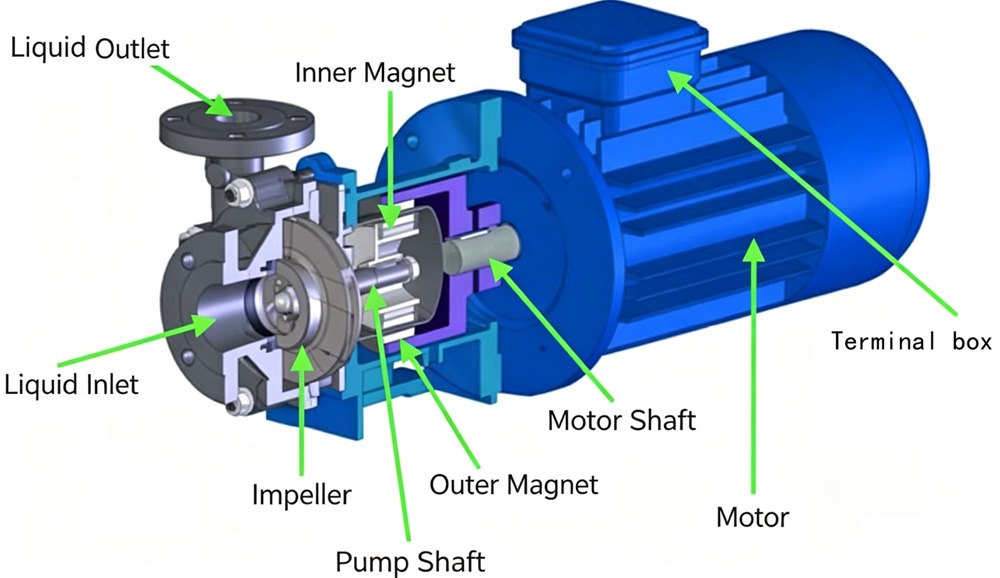
As a core type of zero-leakage pumping equipment, magnetic drive pumps are widely recognized for their reliable sealing performance, excellent corrosion resistance and low maintenance characteristics. They are specially optimized for transporting corrosive, toxic, volatile, high-purity and shear-sensitive fluids, and have become indispensable key equipment in fine chemical, pharmaceutical, semiconductor and environmental protection water treatment industries. Manufactured with diverse high-strength materials including cast iron, ductile iron, 316 stainless steel and Hastelloy alloy, these pumps adapt to complex working conditions and form standardized process pumping solutions for industrial scenarios.
This article comprehensively elaborates on the core working principle, detailed classification, industrial application scenarios, prominent advantages and inherent limitations of magnetic drive pumps. It also conducts an in-depth comparative analysis with traditional mechanical seal centrifugal pumps and canned motor pumps, and summarizes standardized operation procedures and professional maintenance guidelines, providing a full-dimensional technical reference for industrial selection and daily operation management.
Working Principle of Magnetic Drive Pumps
The core operating logic of magnetic drive pumps isnon-contact magnetic field torque transmission, which abandons the direct mechanical connection between the motor shaft and the impeller of traditional pumps. The entire power transmission process relies on the attractive and repulsive forces of permanent magnets, realizing isolated and sealed fluid pumping. The key structural components include an outer magnetic rotor (driving end), an inner magnetic rotor (driven end), a non-magnetic isolation shroud and a sealed fluid cavity.
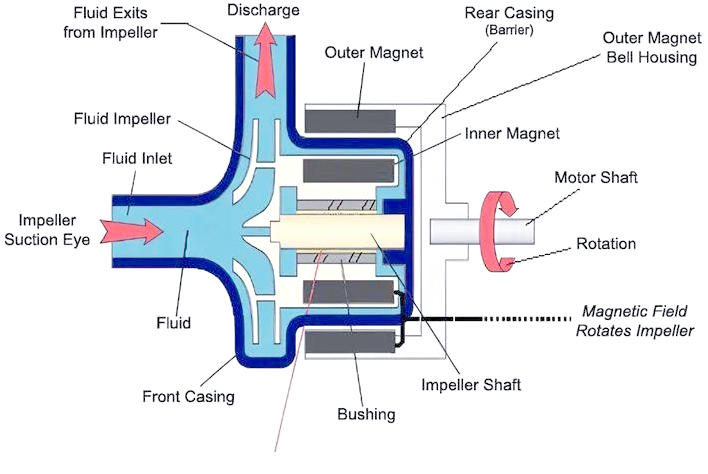
The complete working cycle is divided into three core steps. First, the industrial motor drives the external outer magnetic rotor to rotate at a set speed, generating a synchronous rotating magnetic field outside the isolation shroud. Second, the inner magnetic rotor fixedly connected with the pump impeller senses the alternating magnetic field, and follows the outer magnetic rotor to rotate synchronously under the action of magnetic force. The isolation shroud completely separates the inner and outer magnetic assemblies, isolating the internal fluid medium from the external power structure without obstructing magnetic field transmission.
Finally, the rotating impeller drives the fluid inside the sealed pump cavity to generate pressure difference: negative pressure is formed at the suction port to continuously inhale fluid, and kinetic energy is converted into pressure energy during fluid rotation, so that the fluid is stably discharged from the outlet. Since all fluid-contacting components are fully enclosed in the pump body and there is no dynamic seal penetrating the pump shell, there is absolutely no leakage of liquid or volatile gas during operation. In addition, mag-drive pumps are divided into rotating shaft and stationary shaft structural types, which can meet the operational requirements of different flow rate and pressure working conditions.
Main Types of Magnetic Drive Pumps
According to different fluid transmission principles and structural characteristics, magnetic drive pumps are mainly classified into two categories: magnetic drive centrifugal pumps and magnetic drive positive displacement pumps, which are applicable to completely different industrial scenarios.
1. Magnetic Drive Centrifugal Pumps
This is the most widely used mag-drive pump type in the industry, combining magnetic coupling technology with centrifugal pumping principles. It relies on the high-speed rotation of the impeller to generate centrifugal force, throwing fluid from the impeller center to the pump cavity edge to form pressure difference, so as to realize continuous fluid transportation. Its flow rate is closely related to the rotating speed, and the head is affected by pipeline back pressure. Featuring stable operation, large flow range and simple structure, it is suitable for conventional low-viscosity fluid transmission and most industrial general working conditions.
2. Magnetic Drive Positive Displacement Pumps
This type mainly includes magnetic gear pumps and magnetic lobe pumps, adopting volumetric displacement principle for fluid transmission. Through the meshing rotation of internal gears or lobes, fixed-volume cavities are continuously formed, closed and squeezed to quantitatively transport fluid. Different from centrifugal mag-drive pumps, its conveying flow rate is stable and almost unaffected by system pressure, and it has excellent adaptability to high-viscosity, shear-sensitive fluids. It is mostly used for precise quantitative transportation of viscous media such as chemical slurries and food raw materials.
Core Applications of Magnetic Drive Pumps
Benefiting from zero leakage, corrosion resistance and high cleanliness characteristics, magnetic drive pumps cover multiple high-standard industrial fields, solving the pain points of medium leakage, product pollution and equipment damage in traditional pumping processes.
1. Chemical Processing Industry
It is the most mainstream application scenario of mag-drive pumps. The fully sealed structure safely transports corrosive, toxic, high-temperature and volatile chemical media, completely avoiding medium leakage and toxic gas volatilization. It is widely used in the production and transportation of polyurethane raw materials such as MDI (methylenediphenyl diisocyanate) and TDI (Toluene Diisocyanate), as well as the pumping of strong acids, strong alkalis and organic solvents, effectively protecting production safety and avoiding environmental pollution.
2. Pharmaceutical Manufacturing Industry
The sealless design eliminates the risk of mechanical seal wear and particle falling off, ensuring ultra-clean and contamination-free fluid transmission. It strictly meets GMP production standards, and is used for transporting pharmaceutical solvents, sterile solutions and biological reagents, maintaining the purity of pharmaceutical products and avoiding cross-contamination in the production process.
3. Water Treatment Industry
In sewage treatment and pure water preparation projects, mag-drive pumps are responsible for transporting corrosive water treatment agents such as acids, caustics and disinfectants. Their stable sealing performance prevents chemical leakage and pipeline corrosion, ensuring the stable operation of water treatment systems and reaching environmental discharge standards.
4. Semiconductor Manufacturing Industry
Semiconductor production has extremely high requirements for medium cleanliness and environmental stability. Magnetic drive pumps are used for transporting high-purity etching agents, solvents and cleaning fluids. The zero-leakage and pollution-free characteristics avoid micro-impurity contamination of wafers and precision equipment, and guarantee the ultra-clean production environment required for chip manufacturing.
5. Food and Beverage Processing Industry
Food-grade customized mag-drive pumps are suitable for transporting viscous, shear-sensitive and sanitary media such as fruit juice, syrup, edible oil and dairy products. The smooth internal structure and fully sealed design prevent medium contamination and fluid deterioration, maintain the nutritional integrity and hygienic standards of food materials, and meet food safety production specifications.
Key Advantages of Magnetic Drive Pumps
Compared with traditional mechanical seal pumps, magnetic drive pumps have comprehensive advantages in production efficiency, safety, operation cost and scene adaptability, which are summarized into six core strengths:
1. Improve Production Efficiency and Reduce Operating Costs
Traditional mechanical seal pumps have vulnerable sealing parts, which need frequent replacement and regular maintenance. Frequent shutdown maintenance not only consumes a lot of labor and spare parts costs, but also causes production interruption and reduces production efficiency. Mag-drive pumps completely cancel mechanical seals, seal liquid pots and cooling auxiliary structures, eliminating the core vulnerable parts. The whole machine has a long service life, low failure rate and no frequent shutdown maintenance, which greatly reduces the full-life-cycle operation and maintenance costs and ensures continuous and stable production.
2. Enhance On-Site Operation Safety
Most of the media transported by industrial pumps are hazardous chemicals such as toxic, corrosive and volatile substances. The leakage of traditional pump seals will lead to medium overflow and toxic gas volatilization, endangering the personal safety of operators and causing on-site safety hazards. The full hermetic sealing structure of mag-drive pumps completely avoids liquid and gas leakage, isolates personnel from hazardous media, and fundamentally reduces operational safety risks.
3. Effectively Prevent Fugitive Emissions and Meet Environmental Compliance
Volatile Organic Compounds (VOCs) and Hazardous Air Pollutants (UHAPs) generated by chemical medium leakage are key environmental monitoring indicators for industrial enterprises. Traditional pumps are prone to trace leakage due to seal wear, resulting in unqualified flue gas emissions and environmental penalty risks. Magnetic drive pumps realize zero fugitive emissions, help enterprises meet local and national environmental protection and safety production standards, and avoid production shutdown and penalty losses caused by non-compliance.
4. Certain Dry Run Resistance
Pump dry run (no-load operation without fluid) is a common equipment failure caused by human error or system pipeline failure, which is easy to cause rapid wear and burnout of traditional pump bearings and seals. Optimized mag-drive pump structures can withstand short-term dry operation, effectively reducing equipment damage probability in unattended working conditions, lowering failure maintenance costs and improving equipment operation stability.
5. Excellent Corrosion and Wear Resistance
Mag-drive pumps support diversified high-performance material customization, including stainless steel, Hastelloy, engineering plastics and other corrosion-resistant materials. They can stably adapt to strong corrosive media that ordinary pumps cannot handle, with strong structural durability and wide scene adaptability, solving the problem of easy damage of pumping equipment in harsh chemical working conditions.
6. Simplify Model Selection and On-Site Matching
The model selection of traditional mechanical seal pumps is complicated, which needs to comprehensively consider multiple variables such as seal type, elastomer material and seal accessories matching. Mag-drive pumps have no sealing structure, eliminating the complicated seal matching links. The model selection only needs to match flow rate, head, medium characteristics and temperature, greatly simplifying the equipment selection process and improving the accuracy of type selection.
Inherent Limitations and Common Problems of Magnetic Drive Pumps
Despite outstanding application advantages, magnetic drive pumps also have inherent technical limitations and operational pain points restricted by structural principles, which need to be fully considered in equipment selection and use:
1. Vibration and Bearing Wear Failure
The synchronous rotation of internal and external magnetic rotors relies on magnetic field balance. Magnetic force imbalance, internal component misalignment or installation deviation will cause excessive equipment vibration, accelerating the wear of bearings and bushings. Different from traditional pumps, the bearings of mag-drive pumps are close to the magnetic field and work in the fluid medium for a long time, with higher friction loss, shorter service life of vulnerable parts and higher daily maintenance requirements.
2. Eddy Current Loss and Low Operational Efficiency
When the metal isolation shroud cuts the rotating magnetic field, eddy currents will be generated, resulting in certain magnetic energy loss and heat generation. This eddy current loss is more obvious under high-speed operation, making the overall efficiency of mag-drive pumps 1%–10% lower than that of traditional mechanical seal pumps under the same working conditions, with certain energy consumption defects.
3. Risk of Magnet Demagnetization
The permanent magnet components of mag-drive pumps have strict temperature and magnetic field tolerance limits. Sudden temperature rise exceeding the rated range, long-term high-temperature operation or external strong magnetic field interference will cause permanent magnet demagnetization, resulting in decreased magnetic coupling torque, insufficient pumping power, reduced flow and head, and even equipment failure in severe cases.
4. Poor Solid Particle Handling Capacity
Mag-drive pumps are not suitable for transporting fluids containing a large number of solid particles and abrasives. Solid impurities entering the pump cavity will aggravate the wear of isolation shroud, bearings and impeller, easily cause structural damage and magnetic field deviation, and greatly shorten the service life of the equipment.
5. High Initial Investment Cost
Affected by high-precision magnetic components, special isolation shroud materials and integrated sealing structure, the one-time purchase cost of magnetic drive pumps is higher than that of traditional mechanical seal pumps. However, in the long run, due to the elimination of seal replacement and frequent maintenance costs, its full-life-cycle comprehensive cost is lower than traditional pumps.
Comparative Analysis: Magnetic Drive Pumps vs. Other Sealless Pumps
1. Magnetic Drive Pumps vs. Canned Motor Pumps
Both are mainstream sealless zero-leakage pumps, but they have essential differences in driving principle, structure and application. In terms of working principle, mag-drive pumps rely on permanent magnet coupling for non-contact torque transmission, while canned motor pumps adopt stator and rotor alternating current magnetic field induction to drive rotation. Structurally, canned motor pumps integrate the motor and pump body, with a more compact volume and double-layer containment structure (stator liner + pressure-resistant shell), which can still ensure sealing safety when the inner liner is damaged. Magnetic drive pumps have a single containment structure, and their operating parameters can be adjusted by matching different motors, with stronger parameter flexibility; while canned motor pumps have fixed parameters and need overall replacement if working conditions change.
In terms of application scenarios, canned motor pumps are more suitable for ultra-small space and ultra-high safety working conditions, while magnetic drive pumps have higher cost performance and wider adaptability in conventional high-corrosion and volatile medium transportation scenarios.
2. Magnetic Drive Pumps vs. Traditional Mechanical Seal Centrifugal Pumps
The core difference lies in the sealing and driving structure. Traditional mechanical seal pumps adopt shaft direct connection + dynamic mechanical seal, which inevitably has leakage risks with the wear of sealing parts, and need real-time monitoring of barrier liquid pressure and liquid level, with high maintenance frequency and cost. During start-up and shutdown, the shaft and bearings bear large mechanical load, which is easy to produce abnormal vibration and noise.
Magnetic drive pumps realize zero leakage by canceling dynamic seals, with low monitoring and maintenance costs, small shaft and bearing mechanical load, and stable operation. In terms of comprehensive performance, mag-drive pumps have absolute advantages in safety, stability and full-life-cycle cost, and are more suitable for hazardous, high-purity and difficult-to-seal medium transportation; while traditional mechanical seal pumps are more competitive in low-risk, conventional water body transportation and low initial budget scenarios.
Standard Operation and Maintenance Best Practices
1. Standard Startup Operation Steps (Non-Self-Priming Magnetic Drive Pumps)
Most industrial mag-drive pumps are non-self-priming structures, and standardized startup operations must be followed to avoid dry run damage: First, check the motor fan to ensure flexible rotation without jamming; second, complete pump priming to exhaust internal air and fill the pump cavity with medium; third, fully open the suction valve to ensure smooth medium inhalation; fourth, properly adjust the discharge valve to keep it in a micro-open state; fifth, start the motor and observe the equipment operation state; sixth, confirm the forward rotation direction of the pump; finally, monitor the motor power and operating load to ensure stable flow and pressure.
2. Daily Maintenance and Fault Troubleshooting
Common faults of mag-drive pumps include insufficient discharge pressure, loss of prime, excessive power consumption, abnormal vibration and noise. The troubleshooting key points cover pipeline air leakage, priming adequacy, system head matching, motor speed and rotation direction calibration. In terms of maintenance cycle, the first comprehensive inspection and maintenance shall be carried out after 6 months or 2000 hours of operation, and annual routine maintenance shall be implemented thereafter. For high-corrosion and high-temperature working conditions, the maintenance cycle shall be appropriately shortened according to the medium characteristics to eliminate potential faults in advance.
Conclusion
With the continuous upgrading of pump manufacturing technology, modern magnetic drive pumps adopt high-performance rare earth alloy magnets and optimized bearing structures, effectively reducing magnetic eddy current loss and component wear, realizing smaller volume, higher efficiency and longer service life. At present, diversified customized products such as self-priming type and micro-solid particle adaptive type have been derived, which can adapt to different flow rates, pressures, viscosities and temperature working conditions.
As a mature zero-leakage pumping technology, magnetic drive pumps make up for the inherent defects of traditional sealed pumps, providing safe, clean and low-cost fluid transmission solutions for high-standard industrial scenarios. It has become the preferred equipment for hazardous, high-purity and corrosive medium transportation, and will be further popularized and optimized in the fields of fine chemical industry, new energy, semiconductor and environmental protection in the future.