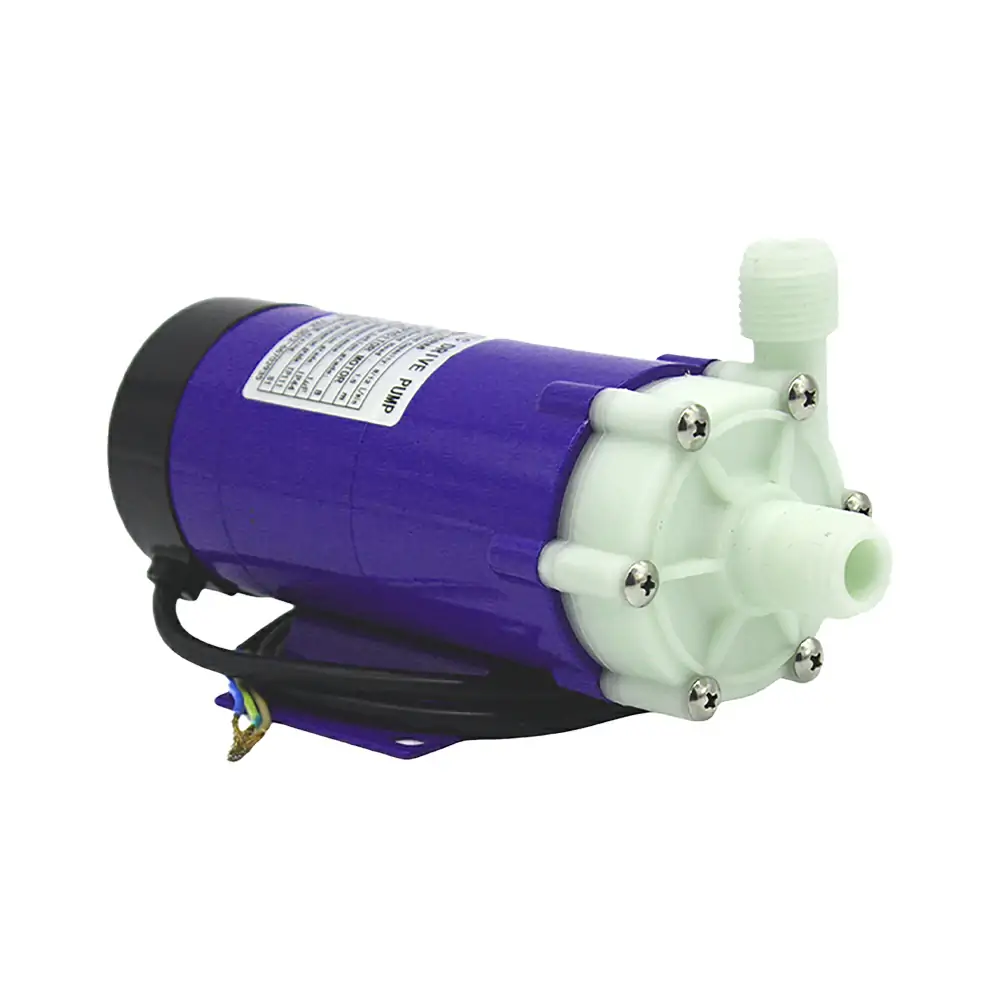
1. What Is a Magnetic Drive Pump?
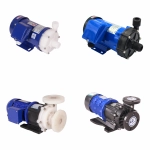
A magnetic drive pump, also known as a mag-drive pump or magnetically coupled pump, is a seal-less centrifugal fluid transport device that utilizes permanent magnetic coupling technology for power transmission. Unlike traditional mechanical seal pumps that rely on direct physical connection between the motor shaft and impeller, this pump isolates the internal magnetic rotor and impeller completely inside the pump casing through a non-magnetic isolation sleeve. Power is transmitted via magnetic field interaction between the external motor-driven magnetic rotor and the internal sealed magnetic rotor, eliminating the traditional shaft seal structure and all dynamic leakage points fundamentally. This unique non-contact transmission design is the core feature that distinguishes magnetic drive pumps from conventional pumps, laying the foundation for their safe and stable fluid transportation performance.
2. Core Advantages of Magnetic Drive Pumps
Before analyzing the limitations of magnetic drive pumps, it is essential to clarify their inherent industrial advantages, which make them indispensable in specific industrial scenarios. First and foremost, the full leak-free performance solves the long-standing pain point of mechanical seal leakage in traditional pumps. It can safely transport corrosive, toxic, volatile, flammable and high-purity liquids, avoiding fluid waste, environmental pollution and personnel safety hazards caused by leakage. Secondly, the seal-less structure greatly reduces maintenance costs. Without vulnerable mechanical seal components, the pump’s wear parts are minimized, extending the service life and reducing frequent replacement and downtime maintenance.
In addition, the fully enclosed internal structure effectively prevents fluid contamination, ensuring the purity and integrity of transported materials, which is critical for high-standard production in pharmaceutical, food and beverage industries. Moreover, the magnetic coupling transmission operates with low vibration and low noise, delivering stable running performance and adapting to continuous long-term industrial operation. Despite these prominent strengths, the structural and working principle characteristics of magnetic drive pumps also bring obvious application limitations, restricting their universal adaptation in complex industrial environments.
3. Key Disadvantages and Limitations of Magnetic Drive Pumps
3.1 Poor Adaptability to Abrasives and Solid-Containing Fluids
Magnetic drive pumps are structurally optimized for clean, low-viscosity liquid transportation, with precision-machined sleeve bearings and thrust surfaces that maintain extremely small internal clearances. When the transported medium contains solid particles, sediments or abrasive impurities, these tiny particles will cause continuous friction and wear on precision bearing components and thrust surfaces. Long-term operation will gradually damage the internal matching accuracy of the pump, reduce operating efficiency, and eventually lead to bearing failure, impeller jamming, or even complete shutdown of the pump and motor system.
While individual enhanced magnetic drive pumps can handle moderately viscous fluids, they are never suitable for media with solid contents such as sludge, slurry and mixed suspension fluids.
3.2 Narrow Optimal Operating Range and Strict Efficiency Limits
As a branch of centrifugal pumps, magnetic drive pumps share the same hydraulic characteristic limitations as traditional centrifugal pumps. Fixed impeller diameter and hydraulic design determine that each magnetic drive pump only achieves the highest working efficiency at a specific rated flow rate and working condition, with a very narrow optimal operating range. Once the operating parameters deviate from the best efficiency point (BEP), the pump’s operating efficiency will drop sharply.
Long-term operation outside the preferred range will trigger a series of mechanical failures and hydraulic problems, including cavitation, severe unit vibration, impeller abrasion and damage, suction and discharge pipeline recirculation, and accelerated aging of bearings and auxiliary components, greatly shortening the overall service life of the equipment.
3.3 Scale Deposition Risk Caused by Magnetic Overheating and Demagnetization
The magnetic coupling power transmission process will continuously generate eddy current heat, which is transferred to the pump internal fluid through the isolation sleeve and rotor surface. Under normal operating conditions, the flowing fluid can take away most of the heat to achieve cooling. However, if the fluid flow is insufficient or the medium circulation is blocked, accumulated heat will rapidly raise the internal temperature of the pump. The high temperature will bake the organic components and suspended substances in the process fluid, forming hard scale attached to the impeller and magnetic hub. Continuous scale accumulation will affect fluid transportation and magnetic transmission efficiency, and in severe cases, cause sudden catastrophic failure of the pump body.
More critically, the permanent magnets inside the pump have a strict temperature threshold. Continuous high-temperature operation will cause irreversible demagnetization of the magnets, permanently reducing the pump’s transmission torque and working performance. Dry running conditions will drastically aggravate heat accumulation and demagnetization failure, becoming a major cause of premature scrapping of magnetic drive pumps.
3.4 High Sensitivity to Low-Flow and Near-Shutoff Working Conditions
Magnetic drive pumps are extremely sensitive to low-flow operation and near-shutoff head conditions. Under these working states, the impeller needs to operate against extremely high back pressure, which sharply increases the load of the magnetic coupling system. Each magnetic coupling has a fixed rated breakaway torque; once the operating load exceeds the torque limit, the magnetic matching state between the external driving rotor and the internal impeller rotor will fail, resulting in decoupling.
After decoupling, the motor runs idly while the impeller stops rotating instantly, which not only interrupts fluid transportation but also causes impact damage to the magnetic rotor and pump body structure, and may even trigger pipeline pressure fluctuation and system failure in the entire fluid circuit.
3.5 Vulnerability to Fluid Viscosity Variation
The viscosity of industrial fluids often changes dynamically with temperature fluctuations, chemical reactions and concentration changes, which directly affects the operating load of magnetic drive pumps. Higher fluid viscosity requires greater magnetic transmission torque and motor input power. Limited by the fixed maximum torque rating of magnetic couplings, when the fluid viscosity increases beyond the design range, the magnetic system will operate in a under-load decoupling state.
Long-term operation under variable viscosity conditions will cause permanent demagnetization of the magnet group, resulting in continuous attenuation of pump performance and increased energy consumption. To avoid such failures, enterprises need to equip additional power monitoring systems for auxiliary protection, which virtually increases the overall investment and operating costs of the equipment.
3.6 Non-Self-Priming and Dry-Running Prohibition
Most standard magnetic drive pumps are non-self-priming centrifugal pumps. Before startup, the pump casing and suction pipeline must be completely filled with liquid to exclude internal air. If gas or vapor accumulates inside the pump body, the impeller will be in a gas-bound state, unable to generate effective suction and discharge pressure, resulting in failure to deliver fluid. To ensure normal priming, magnetic drive pumps must be installed below the liquid level of the storage tank, or equipped with auxiliary priming equipment, which increases installation and process limitations.
Meanwhile, magnetic drive pumps are completely unable to run dry. The internal precision bearings and rotating parts rely entirely on the transported fluid for lubrication and cooling. Dry running without medium will lead to rapid overheating and wear of bearings, isolation sleeves and other core components, causing permanent damage and requiring costly replacement and maintenance.
4. Industrial Applications of Magnetic Drive Pumps and Optimized Alternatives
Benefiting from leak-free, contamination-free and low-maintenance characteristics, magnetic drive pumps are widely used in high-standard fluid transportation scenarios in chemical, pharmaceutical, food and beverage industries.
4.1 Chemical Industry
The chemical industry involves a large number of corrosive, toxic and volatile chemical reagents. The seal-less design of magnetic drive pumps completely eliminates leakage risks, effectively protecting production safety and the ecological environment, so it has become a conventional supporting equipment for chemical fluid transportation. However, its narrow viscosity adaptation range, inability to handle solid-containing media and dry-running prohibition limit its performance in complex and continuous chemical production. QUANTM pumps make up for these shortcomings, with excellent adaptability to variable viscosity fluids and dry-running resistance, providing more reliable and stable operation guarantee for long-term and high-load chemical processing production.
4.2 Pharmaceutical Industry
Pharmaceutical production has extremely strict requirements on fluid purity and product integrity, and cross-contamination must be strictly avoided in the transportation of raw liquid medicines, biological reagents and delicate pharmaceutical intermediates. The fully enclosed internal structure of magnetic drive pumps effectively isolates external pollutants and ensures the sterility and purity of pharmaceutical fluids, so it is widely used in pharmaceutical fluid transportation processes.
4.3 Food and Beverage Industry
In food and beverage processing, magnetic drive pumps are used to transport dairy products, beverages, sauces and other shear-sensitive materials, relying on their stable and gentle transportation performance to avoid material deterioration. Nevertheless, their inability to handle residual solid impurities in food materials and poor dry-running resistance easily cause equipment failures during intermittent production and material switching.