Introduction
In the precision-driven world of electroplating and surface finishing, the difference between a premium-quality product and a rejected batch often comes down to one critical factor: the cleanliness of the plating solution. For manufacturers struggling with pitting defects on plated workpieces, inconsistent bath quality, and escalating chemical costs, the solution lies in advanced chemical liquid filtration technology.
The electroplating filter market was valued at USD 92.10 million in 2025 and is projected to reach USD 152.45 million by 2032, growing at a compound annual growth rate of 7.46%. This growth reflects the industry's increasing recognition that filtration is no longer a secondary accessory but a process-critical control point that directly influences deposit quality, bath life, reject rates, and operational downtime.
This article provides a comprehensive overview of chemical liquid filter machines—their working principles, key components, applications, and the transformative benefits they bring to electroplating operations.
The Problem: Why Electroplating Solutions Need Filtration
Electroplating baths are inherently susceptible to contamination. Over time, suspended solid particles accumulate from multiple sources: dust and dirt introduced from the air, metallic impurities and anode sludge generated during electrochemical reactions, breakdown products from brighteners and organic additives, and general particulate matter from contaminated rinses or rack coatings.
The consequences of inadequate filtration are severe and immediately visible in the final product:
Pitting and Pinholes – Perhaps the most common and frustrating defect. Particles adhering to the surface of the workpiece block the deposition of metal ions. When these particles eventually fall off, they leave behind small pits or craters in the plating layer. As one industry source notes, "Particles block metal ion deposition; when they eventually fall off, they leave small pits or craters behind".
Roughness and Burrs – Without proper filtration, suspended particles can physically embed themselves into the growing metal coating, creating a rough, sandy, or gritty finish that is unacceptable for both decorative and functional parts.
Reduced Corrosion Resistance – A contaminated bath produces a more porous metallic coating with inferior corrosion resistance.
Shortened Bath Life – Unfiltered plating solutions become "poisoned" or degraded much faster. Effective filtration can extend the lifespan of the solution by 3 to 5 times, dramatically reducing the high cost of chemical replacement and hazardous waste disposal.
Proper filtration is, as scientific literature confirms, "the only method that continuously and adequately removes these contaminants".
The Solution: Chemical Liquid Filter Machines
A chemical liquid filter machine is a specialized filtration system designed to continuously remove impurities from plating solutions, ensuring bath purity, process stability, and defect-free finished products. These machines have become indispensable equipment in modern plating lines across industries including automotive, electronics, aerospace, PCB manufacturing, and general industrial finishing.
Core Components and Working Principle
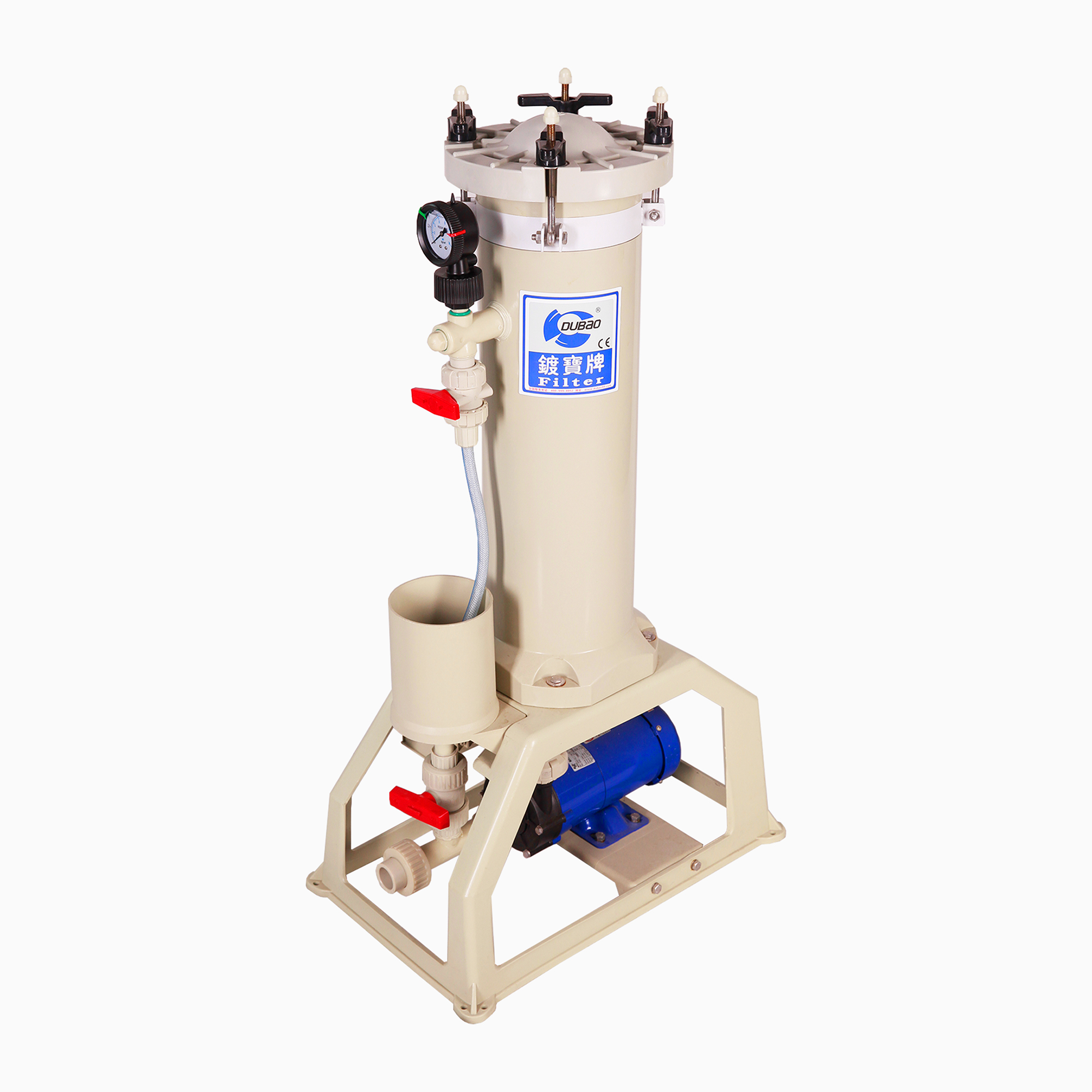
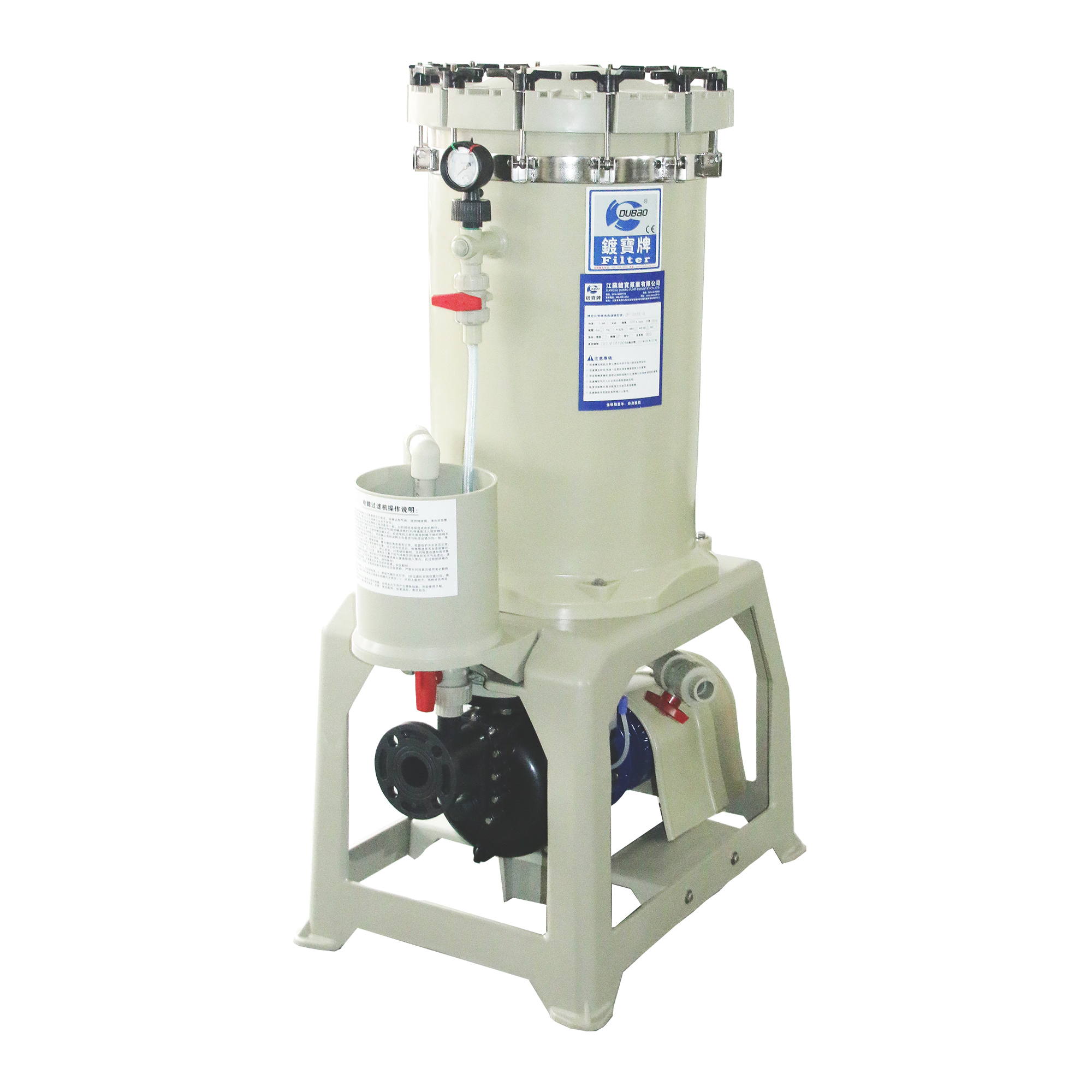
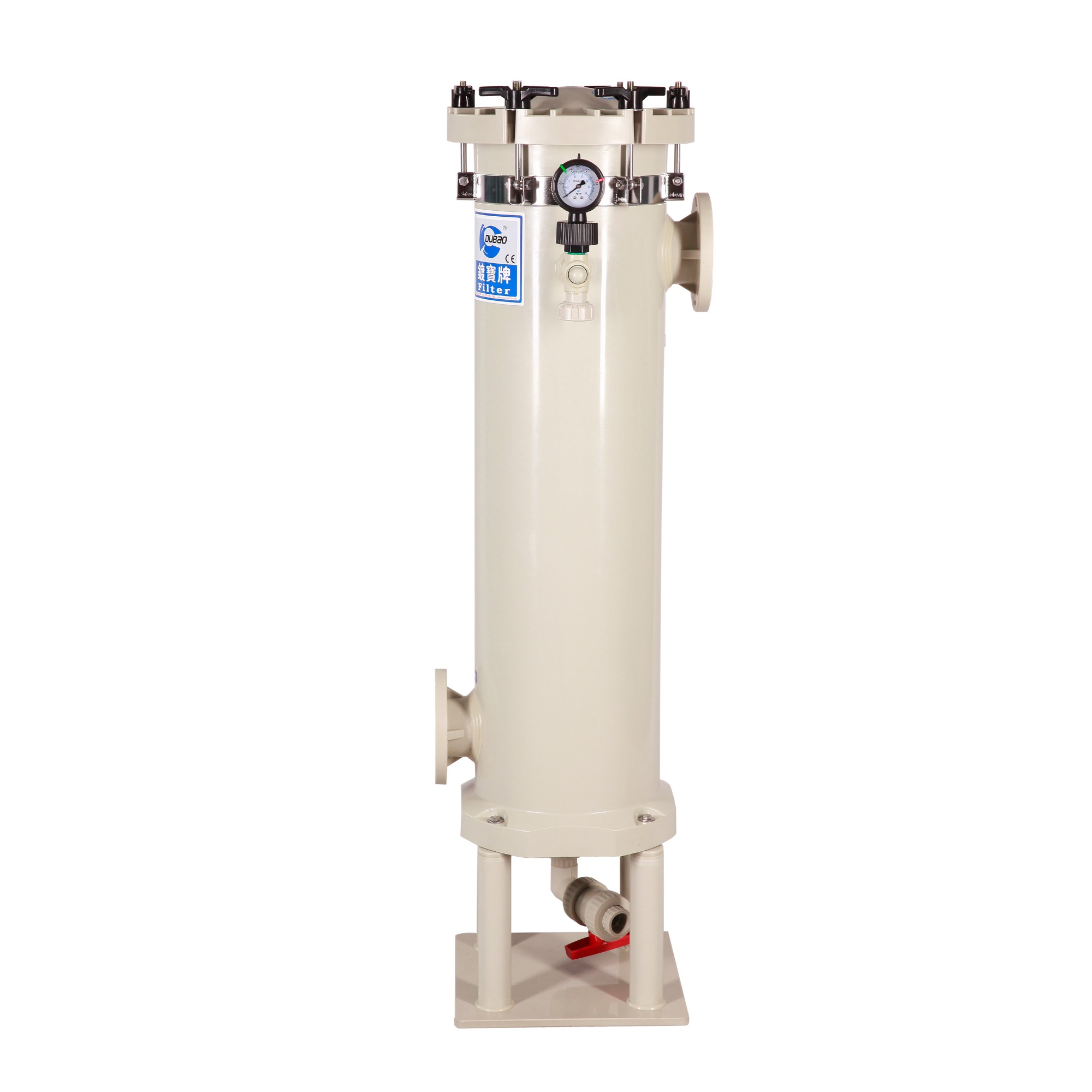
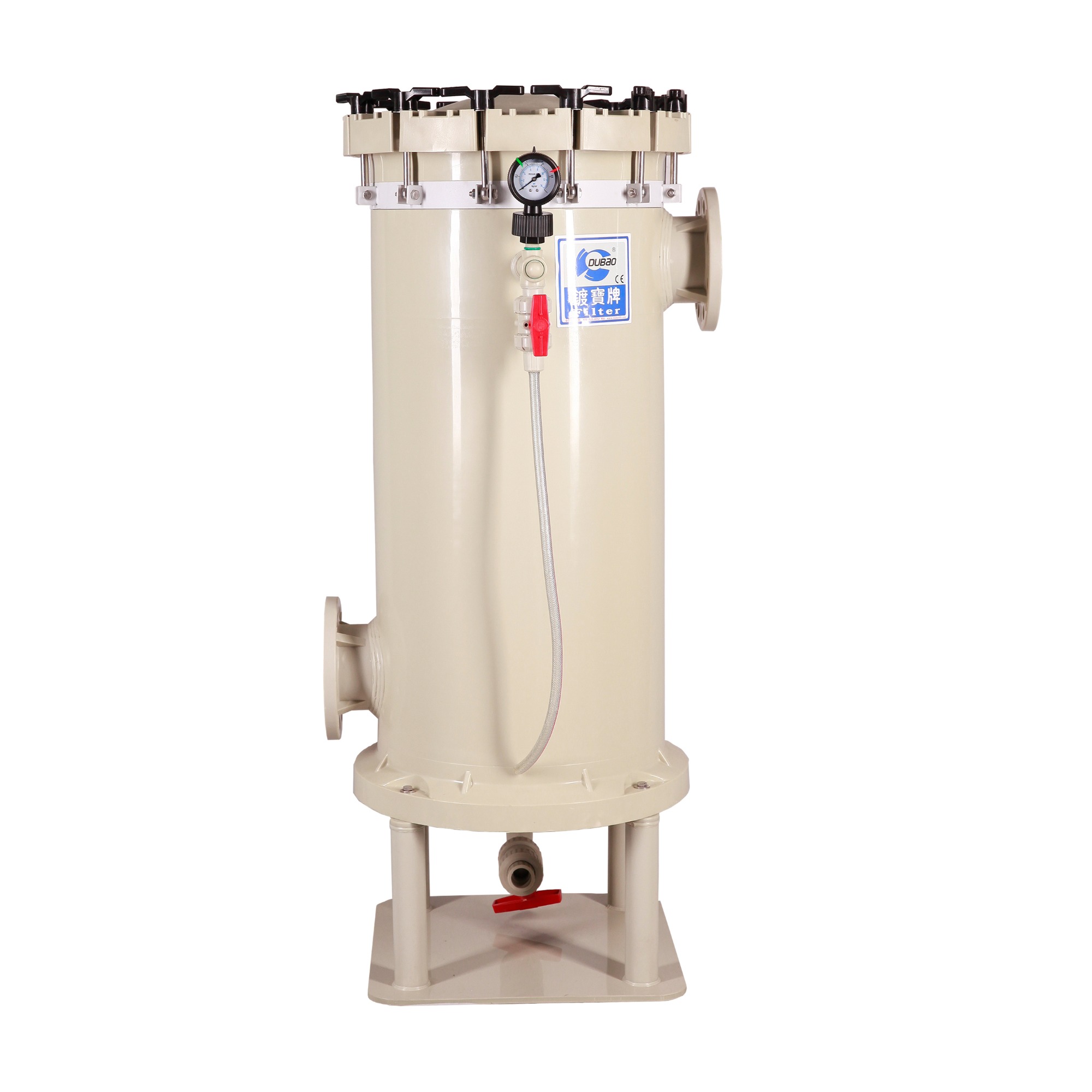
A typical chemical liquid filter machine consists of three primary components: the filter housing (filter vessel), the filter media (cartridges or bags), and a circulating pump.
The Working Process:
-
The pump draws contaminated chemical liquid from the plating tank
-
Liquid is forced through the filter housing and passes through the filter media
-
Impurities are trapped on the surface and within the depth of the filter media
-
Clean, filtered liquid is returned to the plating tank
-
This cycle continues continuously, maintaining consistent bath cleanliness
Key Design Features of Modern Filter Machines
1. Integrally Injection-Molded PP Construction
High-quality chemical liquid filter machines feature main bodies and bases constructed from polypropylene (PP) material using integral injection molding. This manufacturing approach offers several critical advantages:
-
Minimal Welding Points – Fewer weld joints mean fewer potential failure points and leak paths
-
Superior Corrosion Resistance – PP material withstands strong acids, strong alkalis, and a wide range of corrosive chemicals without degradation
-
High Temperature Resistance – Quality PP filters can operate effectively at temperatures up to approximately 70°C (158°F)
-
No Metal Contamination – Unlike metal housings, PP does not introduce metallic impurities into the plating solution
-
Durability and Longevity – The seamless, one-piece construction eliminates weak points and ensures long service life
2. Sealless Magnetic Drive Pumps
Perhaps the most significant innovation in modern chemical filter machines is the integration of sealless magnetic drive pumps. Traditional pumps with mechanical shaft seals are prone to leakage—a serious concern when handling corrosive chemicals.
Magnetic drive pumps offer distinct advantages:
-
Zero Leakage – Without a mechanical shaft seal penetrating the pump housing, there is no possibility of chemical leakage
-
No Shaft Seal Wear – Eliminates the maintenance and replacement costs associated with mechanical seals
-
Safe Handling of Corrosive Liquids – The pump's magnetic coupling isolates the motor from the chemical fluid, protecting both equipment and operators
-
Dry-Run Protection – Many magnetic pumps can be operated dry for short periods without damage
3. Cartridge-Style Filtration
Cartridge filter designs offer high-precision filtration with broad filtration area, high efficiency, simple operation, and easy cleaning. The filter cartridges—typically made of polypropylene felt or similar materials—trap particles throughout the depth of the media, not just on the surface, offering high dirt-holding capacity.
4. Tool-Free Quick-Change Filter Cover
Modern filter machines feature clamp-style or quick-release cover designs that enable rapid filter cartridge replacement without tools. This design minimizes downtime and makes maintenance accessible to operators at any skill level. The ergonomic clamp mechanisms allow cover removal in seconds, significantly reducing the time and labor required for routine filter changes.
5. Integrated Pressure Gauge
A built-in pressure gauge provides real-time monitoring of system pressure. As the filter media accumulates contaminants, pressure differentials increase—alerting operators when cartridge replacement is needed and ensuring optimal filtration performance at all times.
Applications Across Industries
Chemical liquid filter machines serve a wide range of industrial applications:
Electroplating – Filtration of nickel, chrome, zinc, copper, gold, and silver plating solutions to ensure smooth, bright, and defect-free finishes
PCB Manufacturing – Removal of copper powder, anode slime, and suspended particles from electroplating, etching, copper deposition, and cleaning processes
Chemical Nickel Plating – High-temperature filtration for electroless nickel baths, preventing pitting and nodules
Chromic Acid and Etching Solutions – Handling highly aggressive chemicals including chromic acid and etching solutions for various surface treatment processes
Anodizing and Surface Treatment – Maintaining bath purity in anodizing lines and general surface treatment operations
Benefits of Continuous Filtration
1. Prevention of Plating Defects
Continuous filtration removes suspended solids before they can settle on workpieces, eliminating the root causes of pitting, roughness, and pinholes.
2. Extended Bath Life
By constantly removing contaminants, filtration prevents bath degradation and extends solution life by 3 to 5 times.
3. Reduced Chemical Consumption
Longer bath life means fewer chemical replacements, lower material costs, and reduced hazardous waste disposal expenses.
4. Improved Product Quality
A consistently clean bath produces uniform deposits with better mechanical properties—including ductility, hardness, and internal stress—and superior corrosion resistance.
5. Equipment Protection
Filtration prevents abrasive particles from damaging pump impellers and seals, and prevents clogging of heaters and chillers.
6. Environmental Compliance
Efficient filtration reduces hazardous waste generation and helps facilities meet stringent environmental discharge standards.
Market Trends and Industry Outlook
The electroplating filtration industry is undergoing significant transformation driven by quality demands, sustainability goals, and the modernization of plating operations. Key trends include:
From Reactive to Proactive Filtration – Facilities increasingly treat filtration performance as a measurable input to quality, linking it to bath stability, particle counts, and defect analytics.
Application-Specific Solutions – Instead of one-size-fits-all filters, suppliers are tailoring media and configurations to specific chemistries such as acid copper, nickel, zinc, and precious metal plating.
Sustainability Focus – Customers increasingly ask how filtration choices affect bath longevity, sludge handling, and the frequency of dump-and-recharge events.
Operational Resilience – Manufacturers want filtration systems that are easier to maintain, faster to service, and less prone to unplanned shutdowns.
Conclusion
In today's competitive manufacturing environment, the quality of electroplated finishes can make or break a product's market success. Chemical liquid filter machines have evolved from simple auxiliary devices to process-critical equipment that directly impacts product quality, operational efficiency, and environmental compliance.
Modern filter machines—featuring integrally injection-molded PP construction, sealless magnetic drive pumps, cartridge-style filtration, and tool-free quick-change covers—offer a comprehensive solution to the perennial challenges of bath contamination and plating defects. By continuously removing impurities from plating solutions, these systems ensure consistent bath cleanliness, extend chemical life, reduce defect rates, and protect valuable equipment.
For manufacturers still struggling with pitting defects, inconsistent quality, and high chemical costs, investing in a high-quality chemical liquid filter machine is not just an equipment purchase—it is a strategic decision that delivers measurable returns through improved product quality, reduced operating costs, and enhanced competitive advantage.
The filter, as industry experts confirm, is "an indispensable component for quality, efficiency, and cost-effectiveness in electroplating". In the pursuit of flawless surface finishes, there is simply no substitute for proper filtration.