A Complete Guide to Vertical Immersible Pumps
Vertical immersible pumps are widely used in industrial and commercial applications where liquids must be transferred from pits, sumps, tanks, or reservoirs. This guide explains how they work, where they are used, what liquids they can handle, and the maintenance considerations that matter most for long-term reliability.
What Is a Vertical Immersible Pump?
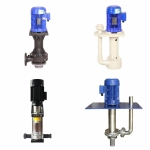
A vertical immersible pump has its motor mounted above the tank or sump, with an extended shaft connecting to the pump end at the bottom. The pump can be mounted internally or externally. Shorter versions can be built without immersed bearings or seals, giving them virtually no maintenance requirements and minimal risk of failure.
Immersible vs. Submersible: What’s the Difference?
Submersible pumps are complete units: both the motor and the pump are designed to be fully submerged. They are widely used for water and sewage handling, and their compact dimensions and integral float switches make them ideal for these applications. However, because they typically use standard carbon and ceramic mechanical seals and are generally made from cast iron or lower-grade stainless steel, they are not suitable for chemicals or aggressive liquids.
Immersible pumps, by contrast, are mounted vertically with the motor above the liquid and the pump end extended below the liquid level. They can be designed and manufactured specifically for corrosive and aggressive applications, using materials ranging from 316 stainless steel to engineered plastics such as polypropylene (PP) and PVDF. Because the motor is above the pump, it can be supplied to suit the environment, including ATEX Zones 1 and 2. Column lengths can be supplied in various sizes, and even with shorter lengths—provided the impeller is flooded at start-up—the pump can still pump down to 6 metres.
How Deep Can a Vertical Immersible Pump Operate?
The operating depth depends on shaft length, bearing arrangement, and construction materials.
Crest’s vertical immersible pump range offers flexible immersion depths to suit a wide variety of tank and sump sizes. Standard column lengths start as short as 300 mm for compact applications and can be built up to 6 metres to reach deeper fluids. Some sub-ranges, such as cantilever models, are designed for shorter assemblies (300 mm to 1.5 m), while heavy-duty plastic/stainless variants such as the PPS range are available up to 4.5 m deep. All designs can also be tailored to the exact immersion depth required for the installation.
What Liquids Can Vertical Immersible Pumps Handle?
Vertical immersible pumps are highly versatile and can handle a wide range of liquids, depending on the materials of construction and hydraulic design.
Commonly handled liquids include:
-
Clean or slightly contaminated water
-
Corrosive chemicals (acids, alkalis, solvents)
-
Industrial wastewater
-
Coolants and process fluids
-
Oils and light hydrocarbons
-
Plating solutions and chemical baths
Some models can handle limited solids or slurries when appropriately designed, although they are not typically intended for heavy solids such as sewage solids or abrasive slurries.
Material selection is crucial. Pumps may be manufactured from cast iron, stainless steel, duplex steel, polypropylene, PVDF, or other corrosion-resistant materials to ensure fluid compatibility. If you are unsure, a chemical compatibility table can help remove the guesswork from material selection.
How Are Vertical Immersible Pumps Installed?
Vertical immersible pumps are usually installed in a fixed vertical position over a sump, pit, or tank. Common installation methods include:
-
Mounting on a cover plate or base plate at the top of a tank or pit
-
Floor-mounted installation with the pump extending downward into the liquid
-
Guide rail systems for deeper or removable installations
Proper alignment is essential to minimise vibration and shaft wear. The pump must be securely supported to handle axial and radial loads during operation.
Electrical connections, discharge piping, and safety guards should be installed so that the motor remains protected from splashing or corrosive vapours. Ventilation around the motor is also important to prevent overheating.
Common Maintenance Issues and Solutions
Although vertical immersible pumps are generally reliable, regular inspection and maintenance are essential to maximise service life.
Most issues can be avoided through regular inspections, monitoring vibration, noise, and temperature, maintaining correct liquid levels, and selecting the right materials from the outset.
Conclusion
Because the motor remains above the liquid, vertical immersible pumps allow faster inspection and safer maintenance than fully submersible designs. With the right materials, column length, and installation method, they provide a reliable solution for transferring corrosive, aggressive, or contaminated liquids from pits, sumps, tanks, and reservoirs.