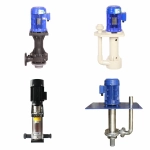
Common Faults and Solutions of Vertical Acid and Alkali Resistant Pumps
1. Malfunction: The vertical acid and alkali resistant pump does not absorb water, and the pressure gauge beats violently.
Reason: Insufficient water diversion perfusion. Air is accumulated in the vertical acid and alkali resistant pump. The suction pipe and meter pipe are leaking.
Solution: Fill the foot with water. Check the pipeline to eliminate air leakage.
2. Failure: The vacuum gauge indicates a high vacuum, and the vertical acid and alkali resistant pump still does not absorb water.
Reason: The bottom valve is not opened or is seriously blocked. The suction pipe has high resistance. The suction height is too high.
Solution:
- Check the flexibility of the bottom valve and remove the blockage.
- Try to keep the suction line as simple as possible.
- Reduce the height of water absorption.
3. Failure: The outlet pressure gauge indicates pressure, and the vertical acid and alkali resistant pump have little or no water.
Reason: The resistance of the outlet pipe is significant—wrong steering. The impeller is blocked. The speed is not enough.
Solution:
- Reduce tube resistance.
- Check the motor rotation direction.
- Remove the impeller blockage.
- Increase the speed.
4. Failure: The flow rate is lower than the design flow rate.
Reason: The impeller is blocked. The seal ring clearance is worn too much. The speed is not enough.
Solution:
- Remove the blockage.
- Replace the sealing ring.
- Increase the speed to the value specified on the nameplate.
5. Fault: The vertical acid and alkali resistant pump consume too much power.
Reason: The packing is too tight, and the packing chamber heats up. The impeller is worn. The water supply of the vertical acid and alkali resistant pump is too large.
Solution:
- Loosen the packing gland.
- Replace the impeller.
- Close the gate valve to reduce the flow rate.
6. Trouble: The sound inside the vertical acid and alkali resistant pump is abnormal, and the vertical acid and alkali resistant pump does not produce water.
Reason: The resistance of the suction pipe is too large. The water absorption height is too large. Air enters the suction pipe. The temperature of the pumped liquid is too high.
Solution: Check whether the suction pipe is blocked. Clean the bottom valve, lower the liquid temperature or lower the water absorption height.
7. Failure: Vibration of the water vertical acid and alkali resistant pump
Reason: The vertical acid and alkali resistant pump shaft are not concentric with the motor shaft. The impeller is unbalanced. The bearing clearance is too large.
Solution: Adjust the vertical acid and alkali resistant pump and motor to align the axis. The impeller passes the balance test, and the unbalanced weight must be about 3 grams. Replace the bearing.
8. Fault: bearing heat
Reason: The bearing is short of oil, or the oil viscosity is too large to affect the lubrication. The bearing wear clearance is too large. The vertical acid and alkali resistant pump is not concentric with the motor.
Solution:
- Come on.
- Change the oil or oil with low viscosity.
- Replace the bearing.
- Adjust the vertical acid and alkali resistant pump and motor to ensure concentricity.
9. Trouble: Loud noise
Reason: The installation of the vertical acid and alkali resistant pump and the motor are not concentric. The bearings of the vertical acid and alkali resistant pumps or motors are worn and bounce.
Solution: Adjust the vertical acid and alkali resistant pump and motor to ensure concentricity. Replace with new bearings.
The above is about the common faults and solutions of acid and alkali-resistant vertical pumps. If you have any other questions, please get in touch with us.