Working principle and structure of magnetic pump

Views : 1501
Update time : 2023-03-08 15:01:32
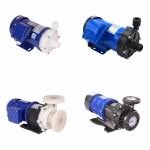
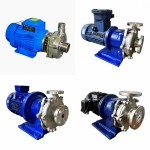
Magnetic pump is a kind of centrifugal pump that drives the rotor through magnetic transmission. It uses a magnetic coupler to separate the motor from the pump body, avoiding leakage problems caused by traditional mechanical seals. The following is a detailed description of the working principle and structure of the magnetic pump:
Working principle:
The working principle of magnetic pump is based on the operation of magnetic coupler. In a magnetic coupler, the motor and the pump body are separated by a magnetic action between an external magnet and an internal magnet. When the rotor of the motor rotates, the outer magnet exerts a magnetic force, which transfers the magnetic force to the inner magnet, thus driving the inner magnet to rotate. Since the inner magnet is connected to the pump impeller, the impeller also begins to rotate, allowing the fluid to be sucked in and out.
Structure:
The main components of magnetic pump include pump body, pump shaft, pump impeller, internal magnet, external magnet and heat insulation sleeve.
The pump body is usually made of stainless steel or other corrosion resistant materials to prevent liquid corrosion.
The pump shaft and impeller are usually integrated and made of stainless steel or other materials.
Internal magnets are usually made of permanent magnets or electromagnetic coils and are mounted on the pump impeller. As the outer magnet rotates, it creates a magnetic field, which transfers the magnetic force to the inner magnet, driving the pump impeller to spin.
External magnets are usually made of magnets, ndFeb or other materials and mounted on the rotor of the motor. When the motor rotor rotates, the outer magnet generates a magnetic field, which transfers the magnetic force to the inner magnet and drives the pump impeller to rotate.
Heat sleeves, usually made of ceramic or other insulating material, are used to separate the motor and pump body to avoid heat conduction while protecting the magnetic coupler from corrosion.
Related News
Read More >>
How to pump Glycol: Glycol Types How to pump Glycol: Glycol Types
Oct .29.2026
Important Considerations When Pumping Glycol,When pumping glycols, several important factors must be considered to ensure efficient and safe operation. These include:
Grease Overview: How to Pump Grease Grease Overview: How to Pump Grease
Oct .29.2026
Pump Options for Grease Transfer Applications,What to Consider When Selecting a Pump for Grease Transfer
Fuel Overview: Pumping Fuel Fuel Overview: Pumping Fuel
Oct .24.2026
Fuel Overview: Pumping Fuel,Fuel pumps generally refer to pumps used for liquids primarily employed in transportation, including petrol, diesel, heavy fuel oil, LPG, and kerosene
Glue Types: How to Pump Glue Glue Types: How to Pump Glue
Oct .23.2026
Glue Types: How to Pump Glue,Pumping glue can be challenging because many adhesives tend to harden and solidify when exposed to air.