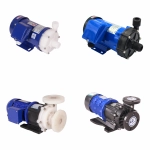
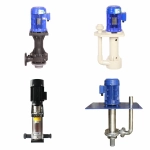
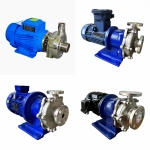
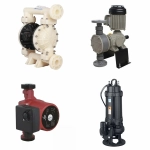
In today's field of fluid transmission, magnetic pumps are in the limelight. What is the reason why today's magnetic pumps account for 64% of the market share? In this issue, Dubai will give you an in-depth understanding of the current situation of magnetic pumps.
When did the magnetic drive pump appear?
The magnetic coupling transmission pump (referred to as the magnetic drive pump) was first successfully developed in 1947 by Geoffreyoward of the British HMD Company.
A few years later, Franz Klaus in West Germany was also successfully developed. Imperial Chemical Industries in the UK and Bayer Chemicals in Germany were the first two companies to use magnetic drive pumps. The original purpose of developing the magnetic pump is to protect the safety and health of personnel engaged in chemical, nuclear power, national defense, and other industrial fields.
For many years, conventionally sealed pumps have been the leading equipment of the petrochemical industry. This pump is fitted with various seals ranging from packing to complex double mechanical seals. The main advantages of sealed pumps are low unit cost and versatility in design, and users are accustomed to this maintenance method. The disadvantage is that the seal must produce leaks to lubricate the sealing surfaces.
What are the advantages of magnetic pumps?
According to foreign samples and literature data, the flow rate of the magnetic drive pump can now reach 1150m3/h: the head can reach 500m. The medium temperature range is -120°℃~450℃, the viscosity limit is 100~200cp, and the content of abrasive solid particles in the medium can get 1.5%. (by weight), the particle size of solid particles can reach 10σμm. After special measures are taken, the pump can transport the slurry containing 20% insoluble solids, the diameter of solids can reach 20mm, and the system pressure can reach 450bar.
Magnetic drive pumps are also suitable for high vacuum conditions where mechanical seals are difficult to handle. These technological breakthroughs and other improvements have improved the magnetic drive pump's reliability and economy. A survey of the availability and repairability of magnetic and mechanically sealed pumps shows that the damage and failure rates of sealed pumps are significantly higher than that of magnetic drive pumps.
For example, the average life of the mechanical seal on a 400 ℃ thermal liquid pump is six months. In contrast, the magnetic drive pump can run for many years; the only maintenance required is regular lubrication of the external bearings of the pump and motor.
The vast experience gained in the chemical industry has led to the conclusion that the magnetic drive pump has been developed as the most economical solution in many process plants. Therefore, the increase in the use of magnetic drive pumps is not only due to a reliable environmental factor but also an economic factor that significantly reduces operating and maintenance costs. Its application range has been expanded from transporting hazardous liquids and precious liquids to ordinary pumps that require long life and less maintenance. For example, magnetic drive pumps on ocean-going ships transport cold water for air conditioning systems due to high maintenance costs. The application of pumps has increased and has become standard equipment in various application fields. Magnetic drive pumps now cover 90% of all applications for sealless pumps.
Combining the above advantages, magnetic pumps have indispensable advantages in terms of cost, stable operation performance, and difficulty in operation.
Therefore, if you are still using traditional pumps with mechanical shaft seals, you are welcome to contact Dubao's experts for professional magnetic pump advice; we are delighted to serve you.