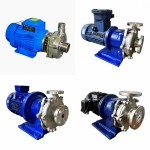
Working Principle of Stainless Steel Centrifugal Pump
(5-inch Stainless Steel Centrifugal Pump)
Working principle of stainless steel centrifugal pump
The stainless steel centrifugal pumpimpeller is installed in the pump shell and fastened on the pump shaft, which is directly driven by the motor. A liquid suction pipe is connected with the suction pipe in the center of the pump housing. The liquid enters the pump through the bottom valve and suction pipe.
The liquid discharge port on the pump shell is connected with the discharge pipe.
Before the pump is started, the pump shell is filled with transported liquid; After startup, the impeller rotates at a high speed driven by the shaft, and the liquid between the blades must also rotate with it.
Under the action of centrifugal force, the liquid is thrown from the center of the impeller to the outer edge and obtains energy, leaving the outer edge of the impeller at high speed and entering the volute pump housing. In the volute, the liquid decelerates due to the gradual expansion of the flow channel, converts part of the kinetic energy into static pressure energy, and finally flows into the discharge pipe at a higher pressure and is sent to the place where it is needed.
When the liquid flows from the center of the impeller to the outer edge, a certain vacuum is formed in the center of the impeller. Since the pressure above the liquid level of the storage tank is greater than the pressure at the inlet of the pump, the liquid is continuously pressed into the impeller.
It can be seen that as long as the impeller rotates continuously, the liquid will be sucked in and discharged continuously.
The above is Dubai industry's interpretation of the working principle of stainless steel centrifugal pump. If you have any questions, please contact us. We are happy to solve your problems.
Important Considerations When Pumping Glycol,When pumping glycols, several important factors must be considered to ensure efficient and safe operation. These include:
Fuel Overview: Pumping Fuel,Fuel pumps generally refer to pumps used for liquids primarily employed in transportation, including petrol, diesel, heavy fuel oil, LPG, and kerosene